
From Tweed to Snowboards : Chanel’s Boldest Turn (Chanel Fall 2001-2002)

It is March 15th, 2001, in Paris, in the middle of Fashion Week. Karl Lagerfeld is about to present his Fall 2001–2002 collection for Chanel.
By this point, Lagerfeld has already been at the helm of Chanel for nearly 20 years, a historic house that he has managed to revitalize without ever betraying its heritage.

We are at the beginning of the 2000s, in an increasingly globalized world shaped by rapid digital progress that is transforming the way we live.
Fashion is changing as well. Dressing has become louder, more expressive : a strong “show-off” aesthetic dominated by gold tones, flashy elements, and highly visible logos. This is the Y2K era, a style that still echoes today through low-rise pants, tinted sunglasses, and bold styling choices.
At the same time, sportswear is becoming increasingly central, with brands like Prada leading the way and redefining luxury through a more functional lens an influence that remains highly relevant today.
Prada Fall Winter 1999
It is within this global context that Karl Lagerfeld presents a truly unique collection one that still visually resonates today, yet about which surprisingly little detailed information exists.
In this show, Chanel takes us to the mountains. The looks are highly sporty, with many of them heavily branded with Chanel logos, capturing the logo-driven spirit of the 2000s.
We see ski suits, beanies, skis, an ice axe, ski goggles, and even a snowboard. Lagerfeld pushes the concept to its absolute limit.
To be fair, this is not the first time a luxury house has explored ski culture. Hermès, as early as the 1930s, was already producing skis and ski attire, at a time when the sport was largely reserved for the bourgeoisie.
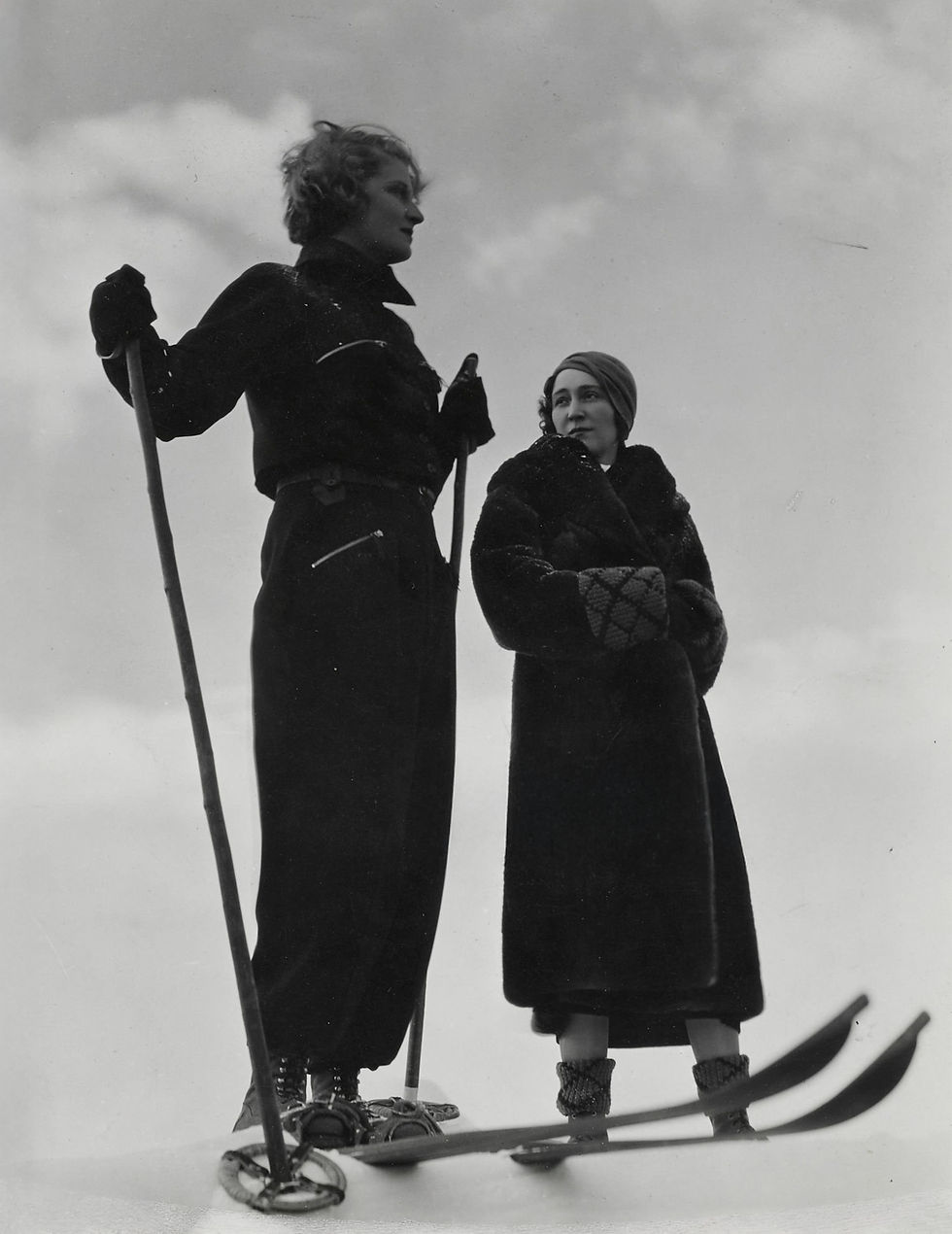
Vogue 1931 - Miss Helen Wedderburn wearing a navy blue whipcord ski-suit from Hermes
However, Chanel approaches it differently : not merely as sports equipment, but almost as decorative fashion objects. It is no coincidence that these pieces frequently appeared in fashion editorials during that period.
One look in particular stands out, and for me, best defines the shift Chanel was undergoing at the beginning of the 2000s. It features a slightly grunge attitude, a central labret piercing, aviator-style sunglasses, a full ski suit, boots, and a Chanel-branded snowboard.
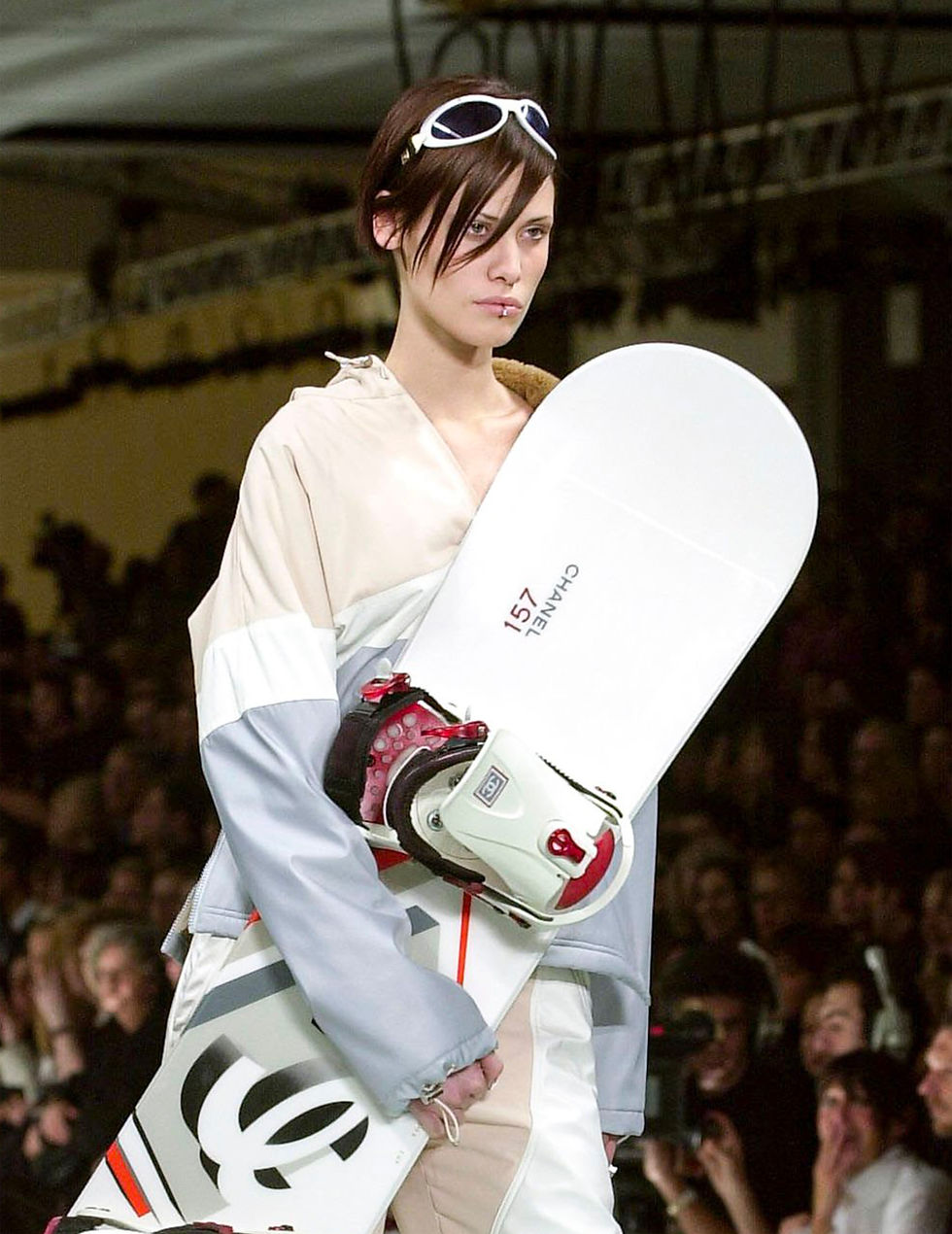
It is a look that would have been unimaginable in Chanel during the 1980s and arguably even within Chanel today.
In contrast, the collection also includes looks that are much closer to Chanel’s original identity : tweed, quilting, couture detailing, pearls, and brooches. This creates a dialogue between two worlds, ultimately forming a very 2000s vision of sport and couture combined.
This tension between highly conceptual pieces and almost anecdotal objects such as a Chanel-branded pair of skis makes this show particularly unique and compelling.


Comments